 |
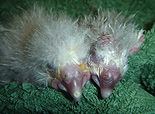
A kakapo chick has hatched in the wild on Little Barrier Island in the Hauraki Gulf, less than two years after reintroduction of a small adult population to the island. With five new chicks on Whenua Hou/Codfish Island, a total of six have hatched after none in 2012 and 2013, raising the total population to 142. 17/3/2014  More More |
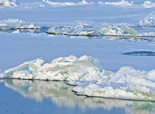 |
On September 16th Arctic Ocean summer sea ice fell to the lowest extent in the satellite record, which began in 1979. The average sea ice extent for September was also the lowest, beating the previous 2007 record. The lowest level of sea ice for 2012 was 51 percent of the 1979 to 2000 average. 3/10/2012 More |
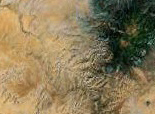 |
Research shows the 2000-2004 drought in the North American West was the worst of the last millennium, with major impacts to the carbon cycle, and hints of even drier times in the future. Carbon taken up by Western forests from the atmosphere dropped by 30 to 298 million metric tons per year. 30/7/2012 More |
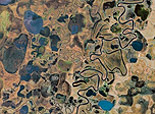 |
One-third to two-thirds of Earth's permafrost which took tens of thousands of years to form, will disappear by 2200, unleashing vast quantities of carbon into the atmosphere. The amount is equivalent to half the carbon released since the dawn of the industrial age.
16/2/2011 More |
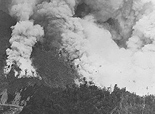 |
Charcoal recovered from lake-bed sediment cores shows that just a few large fires within 200 years of initial colonisation destroyed much of the South Island�s lowland forest. Bracken and shrubland then replaced the burnt forest and smaller fires prevented forest re-establishing. 15/12/2010 More |
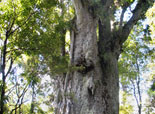 |
The fungus Phytophthora taxon Agathis (PTA) has been found infecting a kauri 500 metres from the largest living kauri. It is the first time PTA has been confirmed in the Waipoua Forest, and puts nearby iconic giants at risk. 28/4/2010 More |
 |
Greenland ice is melting faster than expected, and may be responsible for nearly 25 percent of global sea rise in the past 13 years. Seas are rising more than 3 mm a year - 50 percent faster than the 20th century average. 11/6/2009 More |
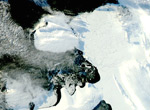 |
An ice bridge connecting the Wilkins Ice Shelf on the Antarctic Peninsula to Charcot Island has very quickly disintegrated. This continues a series of breakups that began in March 2008, that may hasten ice sheet melting, and highlights the effect that climate change is having on the region.
8/4/2009 More |
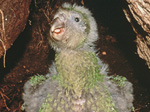 |
The long-running, intensive campaign to save critically endangered kakapo has reached a milestone, with the population reaching a record 103 birds. There is hope for 30 more chicks during this breeding season to provide a great boost and replace older birds of unknown age.
11/3/2009 More |
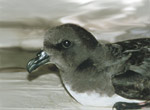 |
A record 13 taiko chicks fledged in the Sweetwater Conservation Covenant on Chatham Island which is fenced to exclude pigs, possums, cats and rats. With about 150 birds and just 16 known breeding pairs, taiko are critically endangered and one of the world's rarest seabirds.
12/6/2008 More |
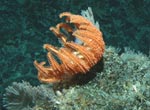 |
Scientists exploring the vast subantarctic underwater Macquarie Ridge mountain range south of New Zealand found a 100 sq.km brittlestar colony. The rare species has thrived on a 850 metre peak in a fast moving ocean current. 19/5/2008
More |
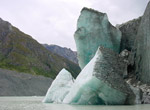 |
The Tasman Glacier, New Zealand's largest, is retreating faster than ever and will ultimately disappear. There was no lake in front of the glacier in 1973. The lake formed by glacial ice melt has grown to 7km long, 2km wide and 245m deep, and could grow to 16km long.
24/4/2008 More |
 |
Nearly 14,000 sq.km of Wilkins Ice Shelf on the Antarctic Peninsula has begun to collapse. The area has had Earth's biggest temperature increase in the last 50 years, rising 0.5�C (0.9�F) a decade. This collapse indicates that Antarctic ice is changing faster than predicted. 25/3/2008 More |
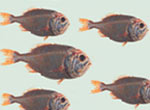 |
The Minister of Fisheries lowered the 2007-08 orange roughy Northern fishery quota by 38 percent to 870 tonnes, and the Chatham Rise and Southern quota by 11 percent to 13,082t. The Western South Island fishery has been closed. 15/11/2007
More |
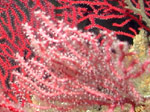 |
Twenty nations forming the South Pacific Regional Fisheries Management Organisation, have agreed on interim measures to control high seas bottom trawling. There must be no significant adverse impact on seamount, hydrothermal vent, coral and sponge ecosystems. 10/5/2007
More |
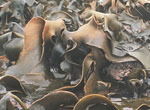 |
The IPCC predicts that by 2020 climate change will bring drought in some eastern areas of New Zealand, and by 2020 significant loss of biodiversity will occur in some ecologically rich sites, including subantarctic islands and alpine areas. 7/4/2007
More |
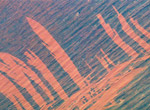 |
Some companies, and state and local governments are taking green initiatives that surpass the snail's pace policymaking of national governments. Companies that realise a hotter climate is bad for business want immediate action. 4/3/2007
More |
 |
Average global temperatures of 6.4°C and higher near the poles could occur by 2100, according to a report by the Intergovernmental Panel on Climate Change. Agriculture and even life would almost be impossible over much of the Earth. 3/2/2007
More |
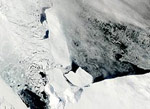 |
An IPCC report is humanity's loudest warning of the catastrophe threatening to overtake the world. Public appetite for action is growing, and the scientific case is beyond doubt, to slow the temperature increase now regarded as irreversible. 3/2/2007
More |
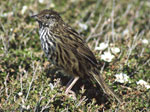 |
The 2005 Threat Classification System lists a better status for the Codfish Island fernbird, crested grebe, Campbell mollymawk, black petrel, New Zealand storm-petrel, and masked booby, but the status of ten other birds has deteriorated. 22/1/2007
More |
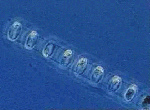 |
When Earth's climate warms the ocean's primary food supply is reduced, which threatens fisheries and ecosystems. When temperatures increase, plant life of tiny phytoplankton decline, but when it cools life becomes more productive. 8/12/2006
More |
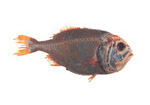 |
Orange roughy will be added to Auustralia's threatened species list, as conservation dependent. It is the country's first commercially harvested fish to be listed under the Environment Protection and Biodiversity Conservation Act. 9/11/2006
More |
 |
Commercial catch limits for orange roughy in the northern North Island will be reduced by 43% to 800 tonnes/year, and limits for the Chatham Rise and southern New Zealand fishery will be reduced by 10% to 11,500 tonnes, which shows the difficulty of managing orange roughy. 19/9/2006
More |
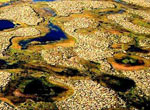 |
Permafrost in Siberia is melting, releasing five times more methane gas than previously predicted. Increased emissions will accelerate warming to cause even more melting. This suggests that the planet is approaching a tipping point with irreversible acceleration in climate change. 15/9/2006
More |
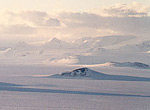 |
Air bubbles trapped in an Antarctic ice core show the reality of climate change, with a rise in greenhouse gases over the last century that is unprecedented in 800,000 years. Human change of the atmosphere has no known natural parallel. 2/9/2006
More |
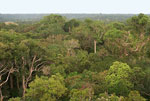 |
Severe drought is returning to the Amazon for the second successive year. One more dry year could tip the whole forest into a cycle of destruction to become desert. Global warming and deforestation are pushing the Amazon and the world towards the brink of disaster. 24/7/2006
More |
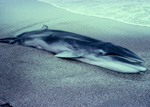 |
A US Federal Court issued a temporary restraining order blocking use of high-intensity, mid-frequency sonar in US Navy exercises off Hawaii. The lawsuit claimed sonar posed an unnecessary and avoidable threat to marine mammals. 3/7/2006
More |
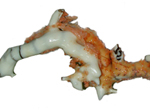 |
New Zealand keeps announcing strategies on high seas bottom trawling, and cooperation with other countries, but no action has been taken and seafloor destruction continues. The government has shunned the United Nation's process that could impose a worldwide moratorium. 22/6/2006
More |
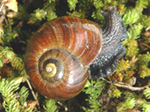 |
Conservation Minister Chris Carter has approved the translocation of the critically endangered land snail Powelliphanta 'Augustus', to allow coal mining in it's only habitat.
A DoC report says not mining is the only option to avoid extinction. 12/4/2006
More |
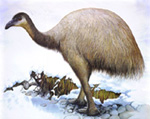 |
A United Nations report says humans are responsible for the worst spate of extinctions since the dinosaurs, and must make unprecedented efforts to slowing losses by 2010.
A range of ecosystems, from coral reefs to tropical rainforests have suffered biodiversity loss. Deforestation continues at an alarming rate, with 6,000,000 ha of forest lost annually since 2000. 22/3/2006
More |
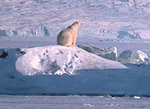 |
Loss of ice from Greenland doubled between 1996 and 2005, as glaciers flowed faster into the ocean. Changes to glaciers are widespread, affecting the entire ice sheet, and increasing its contribution to global sea level rise. 16/2/2006
More |
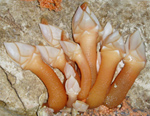 |
Photographs by Ministry of Fisheries observers on board fishing vessels, show a wide variety of bycatch scraped off the seabed by bottom trawling gear. The previously withheld images, indicate extensive destruction of deep-sea fauna. 15/2/2006
More |
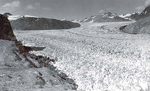 |
Striking comparative images of extensive retraction of glaciers in Glacier Bay during more than 100 years, show how fast Earth is warming, and the complexity of the impact of climate change.
More |
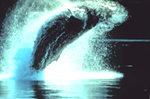 |
Dust down the slogan, it's needed once again: Save The Whale. Twenty years after the introduction of the international whaling moratorium that was supposed to protect them, the great whales face renewed and mortal dangers in 2006. 2/1/2006
More |
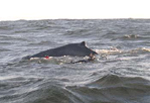 |
A 15 metre long female humpback whale freed by divers from a tangle of crab trap lines near the Farallon Islands, outside San Francisco Bay, nudged its rescuers and flapped around in what marine experts said was a rare and remarkable encounter. 14/12/2005
More |
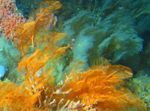 |
Mineral mining on Kermadec Ridge seamounts and hydrothermal vents will alter geochemistry and potentially cause the extinction of unique microbial flora. The Brothers and Rumble III seamounts are closed to fishing to protect habitats, but are now subjected to surface mining. 7/9/2005
More |
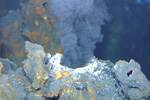 |
The government is negotiating the area of two additional mineral prospecting licences with Neptune Resources Ltd. New permits will give the company rights over 123,000 sq.km of Kermadec Ridge deep seabed, putting seamounts at risk. 16/8/2005
More |
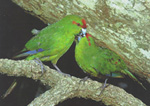 |
Red-crowned parakeet and rock wren are threatened species in a 2005 IUCN Red List update. Chatham Island shag and orange-fronted parakeet are in more trouble as critically endangered; and NZ dotterel, Pitt Island shag, black-billed gull, kaka, and yellowhead rose to endangered. 3/6/2005
More |
 |
The squid fishery fleet was ordered to return to port, and faces government penalties. Seventy percent of the fleet's 35 vessels ignored measures to prevent killing seabirds, agreed to by the Squid Fishery Management Company a year ago. 6/5/2005
More |
 |
The fourth and final trial found again, that genetically modified crops can be harmful
to wildlife. The powerful weedkillers that the crops are engineered to tolerate would bring further damage to a countryside devastated by intensive farming. 22/3/2005
More |
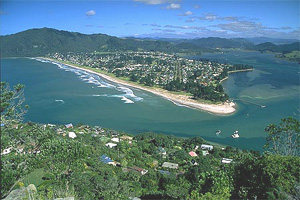 |
A tsunami similar to the Indian Ocean disaster in 2004 would devastate many New Zealand coastal areas and overwhelm civil defence. The scale of the damage prompts re-evaluation of tsunami hazards, particularly coastal development. 28/2/2005 More |
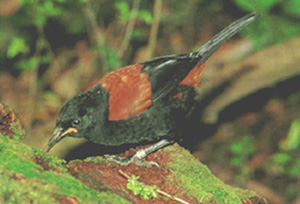 |
Tieke calls are being heard again at Boundary Stream in Hawke's Bay. Translocation of North Island saddleback from Cuvier Island off the Coromandel coast, is a Dept. of Conservation test of pest control, necessary to protect the bird which disappeared from the mainland in the mid-1800s.
10/12/2004 More |
 |
Since 2002, when the Larsen B ice shelf broke away from the Antarctic Peninsula, there has been an eight-fold increase in glacier flow into the Weddell Sea. This has caused glacier elevations to drop 38 meters in six months. 21/9/2004
More |
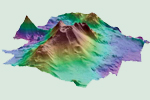 |
Deepsea biodiversity has become one of the world's most important environmental
issues. Seamounts, which are mountains beneath the sea are now revealed. Their massivee size is comparable with many terrestrial mountains, and their ecosystems are unlike anything else. 10/5/2004
More |
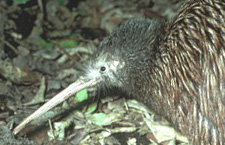 |
Kiwi chicks were moved from Okarito and Haast because of a stoat plague, and there were only 2 rowi and 2 Haast tokoeka survivals. Three North Island sanctuaries had more success with 38 wild nest and 19 reared chicks. 4/1/2004
More |
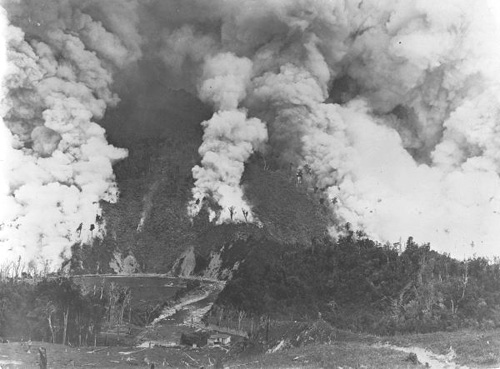 |
Black carbon, or soot, may be the cause of 25 percent of global warming over the past
century. Soot in higher snow and ice covered latitudes of Earth absorbs more of the sun's energy than ice. Warming increases as soot becomes more concentrated on the surface.
22/12/2003 More |
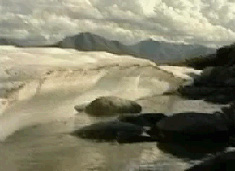 |
The polar regions explicitly reveal the reality of global warming. Satellite
tracking shows that the Arctic ice cap was the smallest in 2002, and perennial sea ice has decreased 9 percent every ten years during the last three decades. 23/10/2003 More |
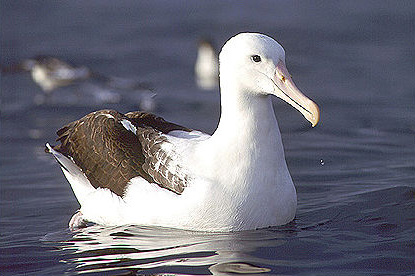 |
More than 10,000 albatrosses and petrels are killed each year in New Zealand waters by fishing. The Ministry of Fisheries' Draft National Plan of Action proposes voluntary mitigation measures to be determined by the fishing industry. 10/9/2003
More |
|
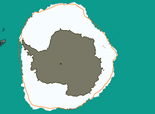 |
As Arctic summer sea ice reached a record low, Antarctic winter sea ice rose to a record high, culminating in a Southern Hemisphere winter maximum extent of 19.44 million sq.km. The increase in sea ice is attributed to a changing weather pattern of stronger circumpolar winds, which blow the sea ice outward. 3/10/2012 More |
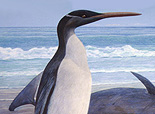 |
Giant fossil penguin have been reconstructed, providing new insights into prehistoric penguin diversity. The body shape of Kairuku waitaki and Kairuku grebneffi, that lived during the Oligocene with three other extinct penguin in what is now New Zealand, is different from any known living or extinct species. 28/2/2012 More |
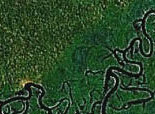 |
Analyses of rainfall across 5.3 million sq.km of Amazonia during the 2010 dry season shows more widespread and severe damage than the 2005 drought. The carbon impact may exceed the 5 billion tonnes of CO2 released from rotting trees after the 2005 drought. 3/2/2011 More |
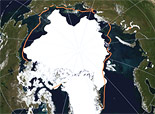 |
In September 2010, the Arctic sea ice extent was the third-lowest in satellite records, falling below the 2009 extent. The lowest and second-lowest ice areas were in 2007 and 2008. Arctic sea ice is continuing its' long-term decline, and is younger and thinner than in previous decades. 4/10/2010 More |
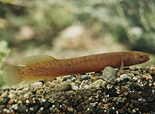 |
The freshwater native brown mudfish Neochanna apoda, which is endemic to New Zealand, moves from 'near threatened' to 'vulnerable' in the IUCN Red List of Threatened Species update. The list shows 17,291 out of 47,677 of the species assessed threatened with extinction. 3/11/09 More |
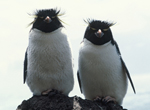 |
The status of grey duck, grey-headed mollymawk, and eastern rockhopper penguin have worsened to 'nationally critical', joining the 22 most endangered birds in the 2008 NZ Threat Classification System. They are declining at 70 percent over 3 generations. 17/4/2009 More |
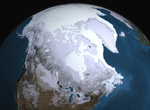 |
Arctic sea ice has begun its seasonal decline. The extent of ice during the winter was similar to recent years, but lower than the 1979 to 2000 average. However, the melt season began with a substantial amount of thin first-year ice that is vulnerable to summer melt.
6/4/2009 More |
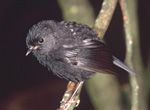 |
The islands have more rare birds than any NZ region. A quarter of "nationally critical" listed birds were only found there before translocations to predator-free islands. A fifth of "nationally endangered" birds are endemic to the islands. 2/7/2008
More |
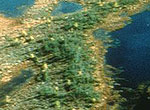 |
Warming over northern Alaska, Canada, and Russia could triple during periods of rapid sea ice loss. Research raises concerns about permafrost thawing, and the consequences for ecosystems, human infrastructure, and release of additional greenhouse gases.
10/6/2008 More |
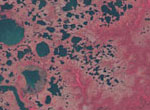 |
Climate change has impacted a wide range of Earth's natural systems, from permafrost, to earlier plant blooming across Europe, to declining productivity in African lakes. The disappearance of Siberian lakes is evident over 25 years, as permafrost thaws and water drains deeper into the ground. 14/5/2008
More |
 |
Molecular analysis of one of the world�s rarest seabirds could prevent extinction. It was found that 95 percent of taiko non-breeding adults are male. The low population may be making it difficult for males to attract a mate. 23/4/2008
More |
 |
EEZ bottom trawling contradicts NZ's 2006 United Nations position, and interim measures by the South Pacific Regional Fisheries Management Organization. Ecosystem damage and management policies are ignored in quota decisions. 15/11/2007
More |
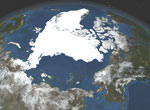 |
Summer ice in 2007 reached the lowest perennial cover on record - 25 percent less than the previous low set in 2005. This year is 38 percent lower than the climatological average. The dramatic reduction is further confirmation of the occurrence of climate change. 1/10/2007
More |
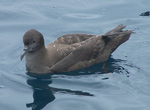 |
Scientists show the path of shearwater that breed in New Zealand and migrate each year in a trans-equatoral 64,000 km roundtrip to Japan, Alaska or California for the northern summer. It is the longest recorded animal migration. 25/4/2007
More |
 |
Presidential candidate, John Edwards, proposes cleaner use of coal, and a ban on any new coal power plant that doesn't capture carbon dioxide. It is the first time climate change has been introduced so prominently in a campaign. 26/3/2007
More |
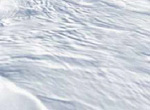 |
A network of waterways beneath a fast-moving Antarctic ice stream provide clues as to how "leaks" in the system impact sea level rise and the world's largest ice sheet. Satellites found rises and falls in the surface of the ice sheet. 16/2/2007
More |
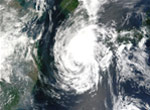 |
In 2005, atmospheric CO2 was 379 parts per million, according to the IPCC. The pre-industrial level was 278 ppm, and ranged from 180 to 300 ppm over 650,000 years. A faster build-up is shown by the 1995 to 2005 annual average increase of 1.9 ppm, which was 1.4 ppm from 1960 to 2005. 3/2/2007
More |
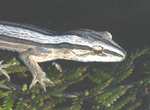 |
A male Coromandel striped gecko, New Zealand's rarest reptile and the world's rarest gecko, is the third live specimen found since discovery in 1997, and the only one living. A 4-year search after the only female died was unsuccessful. 17/1/2007
More |
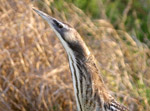 |
The sooty shearwater enters the 2006 IUCN Red List of Threatened Species as 'near threatened', and the Australasian bittern's status worsens to 'endangered'. The NZ storm-petrel which was thought to be extinct is 'critically endangered'. 10/12/2006
More |
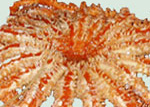 |
A global moratorium to stop destruction of high seas biodiversity has been blocked in UN negotiations. A compromise agreement to protect vulnerable areas, which got interest from some nations that opposed a ban was also derailed. 25/11/2006
More |
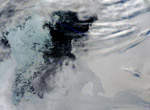 |
The average sea ice extent at the end of the melting season was 5.9 million sq.km, the second lowest on record. Decline is now 8.6 percent per decade. The melt season was a polynya, an area of water surrounded by ice as big as the State of Indiana. 4/10/2006
More |
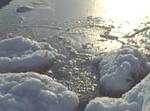 |
Perennial sea ice that normally survives the summer melt season and remains year-round, shrunk abruptly by 14 percent between 2004 and 2005. Another NASA study shows winter Arctic sea ice has fallen 6 percent during the last two winters, far more than the 1.5 percent loss per decade. 15/9/2006
More |
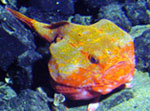 |
The government is seeking an immediate United Nations moratorium on bottom trawling on high seas not managed by Regional Fisheries Management Organisations. This will have no effect in the South Pacific for many years because negotiation of an RFMO is underway. 13/9/2006
More |
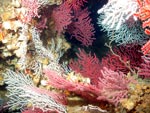 |
The New Zealand government is called on to stop bottom trawling in the EEZ, prevent NZ vessels from high seas trawling, and join the many nations that support a United Nations global moratorium on destructive fishing practices. 30/8/2006
More |
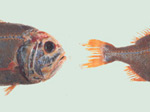 |
Four international fishing companies, including New Zealand company Sealord, propose to stop bottom trawling in areas of the Southern Indian Ocean, in an attempt to divert attention away from a United Nations high seas moratorium. 7/7/2006
More |
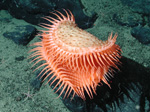 |
Discussion on high seas bottom trawling is maturing, and the issue is expected to be addressed at the UN General Assembly in November 2006. A growing number of countries now say a moratorium is needed throughout the high seas. 22/6/2006
More |
 |
Temperature is on course to rise more than 3°C, warns Britain's chief scientist. Sir David King issued a stark wake-up call that climate change could cause famine and drought unless the world's politicians take urgent action. 15/4/2006
More |
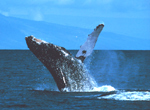 |
The Japanese company Nissui which owns whaling ships and a cannery, is divesting its' whaling assets and no longer participating in Japan's "scientific" whaling. Nissui owns half of the NZ company Sealord which was subjected to a tuna boycott, urging the company to end whaling. 4/4/2006
More |
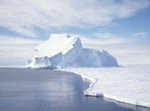 |
The first gravity survey of the Antarctic ice sheet, shows a significant decrease in ice mass, enough to raise global sea level 1.2 mm during the survey period, or 13% of overall rise. The ice sheet lost 152 cu.km annually from 2002 to 2005. 2/3/2006
More |
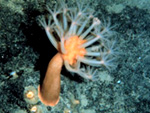 |
The Ministry of Fisheries proposes to protect 30 percent of the New Zealand EEZ from destruction by bottom trawl fishing. Meanwhile the Ministry of Economic Development issues another licence for deep seabed mineral prospecting. 15/2/2006
More |
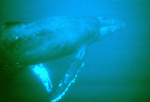 |
Sixteen countries have urged Japan to stop killing whales for alleged scientific
research. NZ joined other nations to denounce the Japanese programme that will take 935 minke whales from the Southern Ocean Whale Sanctuary this season. 18/1/2006
More |
|
|
Prominent scientist James Lovelock has reached his astonishing conclusion that climate change is insoluble and life on Earth will never be the same. He says the world has passed the point of no return, and civilisation is unlikely to survive. 16/1/2006
More |
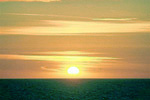 |
The world is hotter than at any stage since prehistoric times. This startling conclusion comes as NASA reported 2005 was the hottest year ever recorded. Carbon dioxide levels in the air - the main cause of global warming - are higher than any time in the last hundreds of thousands of years. 18/12/2005
More |
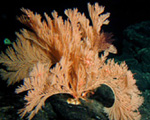 |
The deep ocean is one of the world's last great wildernesses. But not for long. Two kilometres below the surface, scores of rare and exotic species are being wiped out at a dramatic rate. Britain's leading marine scientists have warned that many species face extinction because of the global growth in deep-sea trawl fishing. 16/10/2005
More |
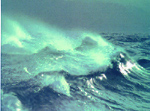 |
Management of the largest Exclusive Economic Zone in the Pacific Ocean
is seriously inconsistent, as one branch of government rushes to establish unregulated mineral mining, but conservation is held up because of no Oceans Policy or legislation.
7/9/2005 More |
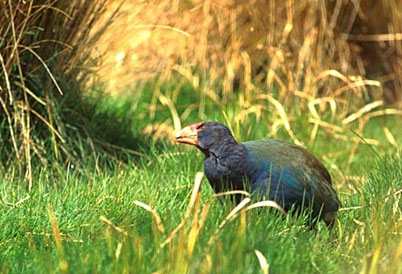 |
The annual takahe census covering the 50,000ha takahe Special Area within Fiordland National Park shows unprecedented population growth, with a 13.6% increase in adult birds to 177, and the number of breeding pairs up 7.9%. 4/7/2005
More |
|
|
Australian mining company Neptune Resources Ltd is prospecting for minerals on Kermadec Ridge seafloor, over an area equal to 12% of the New Zealand land area. The rush to exploit the deepsea continues without conservation. 10/5/2005
More |
 |
Nationwide assessment shows concentrations of Escherichia coli, inorganic nitrogen and reactive phosphorous in all low-elevation rivers and streams, exceeding guidelines for the protection of aquatic ecosystems and human health. 23/3/2005
More |
 |
Air guns used by seismic survey ships produce sound of 250 decibels, which is higher than any man-made source except explosives. Substantial evidence shows that bursts of energy used in probing the seafloor can kill, injure and disturb fish, whales, dolphins, squid and other marine life. 2/3/2005
More |
 |
The year 2004 was the fourth warmest on average for the planet since the late 1800s. The 2004 average temperature at Earth's surface was 0.48°C or 0.86°F above the average from 1951 to 1980. Globally, 1998 was the warmest year on record with 2002 and 2003 second and third. 8/2/2005
More |
 |
Three Cabinet Ministers announce a strategy to improve protection of deep-sea biodiversity, and address the threat of bottom trawling in international waters, but fail to identify actions within the jurisdiction of the NZ Exclusive Economic Zone. 26/9/2004
More |
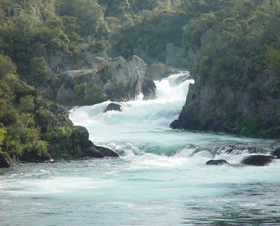 |
Since the Project Aqua hydroelectric project has been scrapped, business groups and government opposition parties seek to make consent under the RMA easier, with limited notification that takes away public submission rights of parties that are not directly affected.
10/6/2004
More |
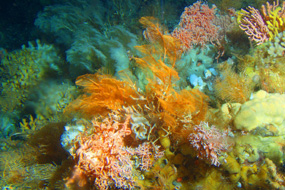 |
In unprecedented action, 1,136 marine scientists and conservation biologists have called on governments and the United Nations to protect threatened deepsea coral and sponge ecosystems, with a moratorium on bottom trawl fishing. 16/2/2004
More |
 |
Overfishing is causing the demise of orange roughy and other fish, according to World Wildlife Fund and TRAFFIC research. Expanding, unregulated fishing in deep waters is fast depleting species that could become commercially extinct if protective measures are not taken immediately. 30/12/2003
More |
 |
The government has ignored a public majority that opposes introduction of genetically modified organisms, and has proceeded to allow the application process for release to commence, after a 2-year moratorium.
See update 1 Jan 2004
See 3 Nov 2003 archive |
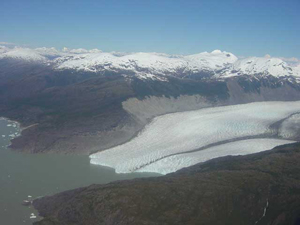 |
The Patagonia icefields of Chile and Argentina, the largest non-Antarctic ice masses in the Southern Hemisphere, are thinning at an accelerating pace and account for 10 percent of global sea-level change from mountain glaciers. 16/10/2003
More |
|